In this article
Talc is a soft mineral (hydrated magnesium silicate) ground into the powder found in baby powder, body powders, pressed makeup and dry shampoo. It became one of the most contested cosmetic ingredients because talc deposits in the earth can be naturally intermingled with asbestos, and because of long-running research and litigation over genital use of talc-based powder. In 2024 the World Health Organization's cancer agency classified talc as “probably carcinogenic to humans” (Group 2A) — a hazard classification based on limited evidence, which this article explains carefully.
What talc is and what it does in a product
Talc's plate-like particles absorb moisture and oil, reduce friction, and give powders their silky, blendable texture at very low cost. Those properties made it the default body powder for over a century and a staple of pressed cosmetics — face powder, blush, eyeshadow — where it improves payoff and wear. Cosmetic-grade talc is supposed to be purified and asbestos-free, and reputable suppliers test for it; the question that has dogged the industry is how reliably that separation happens in practice.
Where you will find talc
- Body powders and (historically) baby powders — the most debated use
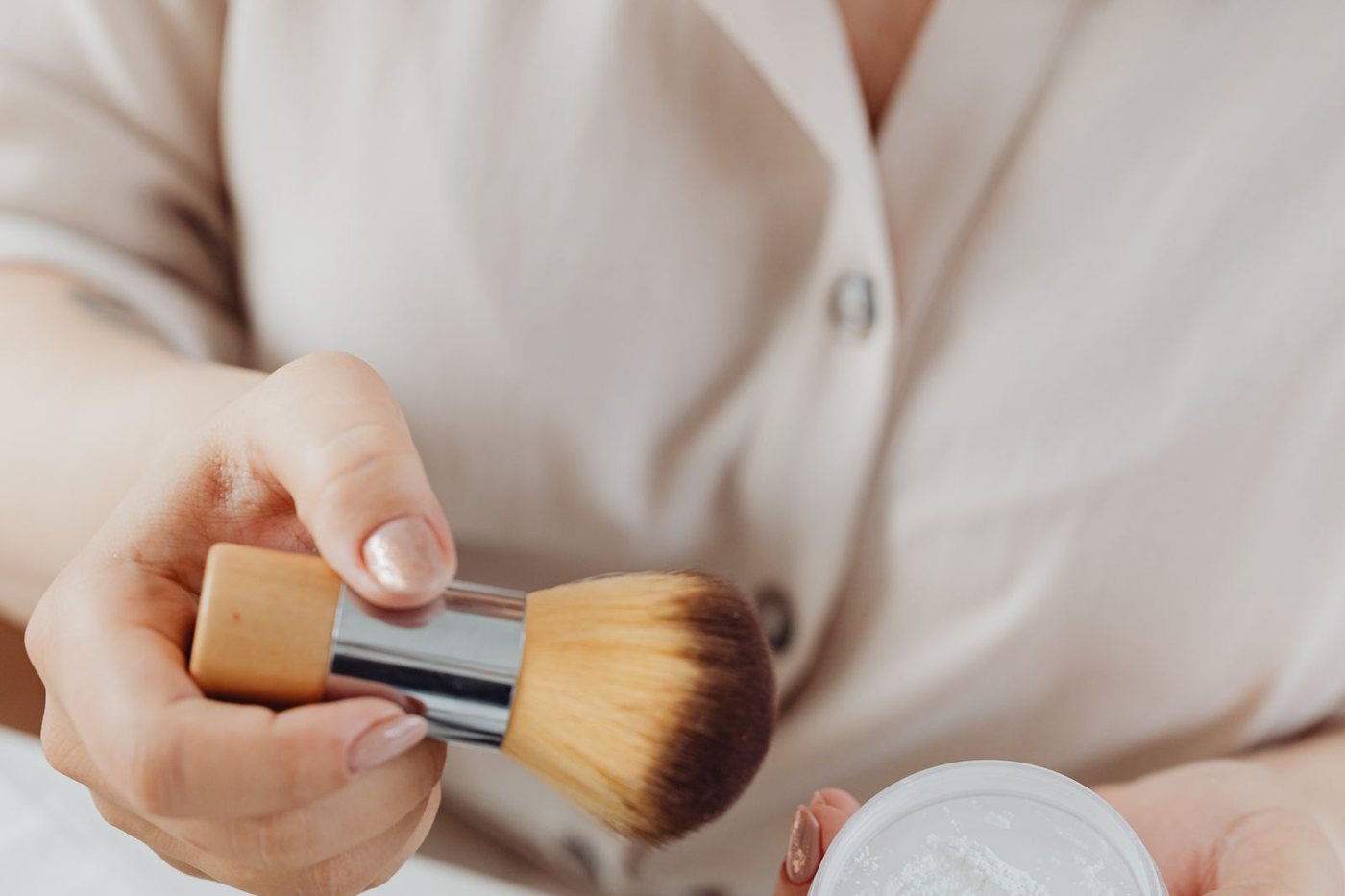
- Pressed powders, foundations, blush, eyeshadow and other colour cosmetics
- Dry shampoos and some bath products
- Outside cosmetics: pharmaceuticals (tablet coating), food anti-caking, ceramics and paper
Why people avoid talc
Two exposure routes drive the debate. The first is inhalation: loose powders puff into the air, and both talc itself and any asbestos fibres travelling with it are respiratory hazards — paediatric guidance has long advised against baby powder partly because infants can inhale it. The second is perineal (genital) use of talcum powder over years, which population studies have associated with a modest increase in ovarian cancer risk; that association, and the asbestos question, sit behind thousands of lawsuits against manufacturers.
The market's verdict arrived ahead of the science's: the best-known manufacturer withdrew talc-based baby powder from North America in 2020 and switched its global baby powder to cornstarch in 2023, citing falling demand — demand fell because consumers had already decided.
What regulators and the evidence say
The US FDA's talc page describes the asbestos-contamination issue and the agency's ongoing programme of testing talc-containing cosmetics; FDA-commissioned lab testing has occasionally found asbestos in individual products, which were recalled. In July 2024, the International Agency for Research on Cancer (IARC) classified talc as Group 2A, "probably carcinogenic to humans", based on limited evidence in humans (ovarian cancer), sufficient evidence in animals, and mechanistic data. A hazard classification is not a measurement of risk at a given exposure — but 2A is a serious category, and it shifted regulator attention worldwide; several jurisdictions have moved to require asbestos-free certification or to phase talc out of cosmetics.
The careful summary: nobody credible claims cosmetic talc is proven safe in every form and use; nobody credible claims a dusting of face powder is equivalent to industrial exposure. The trend of both regulation and the market is steadily away from talc, and alternatives are cheap — which is why many people simply move on.
How to spot talc on a label
- Talc — conveniently, the INCI name is just "talc"
- Loose and pressed powders list it near the top when it is the base
- "Talc-free" claims are now standard among newer powder brands; certified asbestos-free testing claims also appear
- For powders you already own: check whether the first ingredient is talc or a starch (corn, rice, arrowroot)
What to use instead
Starches do most of talc's job: cornstarch, rice starch, tapioca and arrowroot powders are the mainstream body-powder replacements (arrowroot also stars in natural deodorants — see our deodorant without aluminium guide). In colour cosmetics, mica, kaolin clay and silica-based formulas cover the pressed-powder categories, and many former talc lines have been reformulated around them. For babies, paediatric advice has moved away from powders of any kind near the face; plain nappy care with barrier creams (often zinc-oxide based — see zinc oxide) is the modern default.
Talc at work and in medicine — the other exposures
Two more contexts complete the picture. Occupationally, talc miners and millers were the original respiratory concern, and modern workplace rules treat respirable talc dust seriously — the same inhalation logic behind the advice not to puff loose powder around babies. Medically, sterile talc is deliberately used inside the chest in a procedure (pleurodesis) to treat collapsed lung — a fact that surprises people, and a reminder that hazard depends on dose, purity, route and supervision: the surgical material is pharmaceutical-grade and asbestos-free, placed by doctors for a defined benefit. Neither context changes the cosmetic guidance in this article, but both explain why "talc" headlines swing between alarm and reassurance — they are usually describing different talcs, in different lungs, at wildly different doses.
Frequently asked questions
Is talc itself a carcinogen?
IARC's 2024 classification places talc in Group 2A, 'probably carcinogenic to humans', based on limited human evidence and stronger animal/mechanistic evidence. Talc contaminated with asbestos is a separate, clearer hazard: asbestos is Group 1, a known carcinogen. Classifications describe hazard, not the risk from a particular product use.
Why is asbestos sometimes in talc?
Talc and asbestos minerals form in similar geological conditions and their deposits can intermingle. Cosmetic talc is supposed to be selected and purified to be asbestos-free; testing by regulators has found occasional failures, which is the core of the controversy.
Should I throw away my talc-based makeup?
That is a personal decision. Pressed face products involve far less airborne powder than loose body powder, and the exposure pattern differs from the perineal use studied in the ovarian-cancer literature. Many people use up compacts and replace powders with talc-free versions, while discarding loose powders they no longer trust.
Is cornstarch powder completely safe?
Starch powders avoid the asbestos question entirely. They still should not be inhaled in clouds (no loose powder should, especially around babies), and starch can feed yeast in moist skin folds for some users — a formulation nuance, not a scandal.
Was talc banned?
Not broadly, yet. It remains permitted in many jurisdictions while asbestos-testing requirements and phase-out proposals advance. The consumer market, led by baby powder's switch to cornstarch, has moved faster than most statutes.
Is talc in pressed powder (blush, eyeshadow) as concerning as loose powder?
The exposure differs: pressed products release far less airborne dust, and the perineal-use literature does not apply. The residual question is asbestos contamination of the mineral supply, which is why the practical advice is to choose brands that publish asbestos-free testing for their talc — or talc-free formulas, which are now plentiful in colour cosmetics.
Checked against US FDA, EWG Skin Deep cosmetics database, IARC Monographs (WHO), Cancer Research UK sources · Last updated 2026-10-22 · How we assess ingredients