In this article
The rule for this guide is simple: no sodium lauryl sulfate (SLS) and no sodium laureth sulfate (SLES) in the ingredient list. But sulfate-free is a spectrum, not a guarantee of gentleness — some sulfate-free shampoos clean harder than the sulfate ones they replace. Below: how the category really works, three widely available picks matched to hair types, and the label check that tells you what any bottle will actually do. Background: our sulfates explainer.
Why go sulfate-free — and when not to
Sulfate-free washing suits frequent washers, dry, curly and colour-treated hair, and scalps that react to strong detergents — the full reasoning is in the sulfates explainer. It is not automatically right for everyone: very oily scalps, heavy styling-product users, and people treating dandruff with medicated shampoos may do better with a stronger cleanser used less often. Most people who switch successfully keep one clarifying option in reserve for a monthly deep clean.
Expect a different wash experience: low-foam does not mean not-cleaning. Modern sulfate-free systems foam modestly through co-surfactants like cocamidopropyl betaine, and technique (two shorter washes, scalp massage, thorough rinsing) matters more than lather volume.
The sulfate-free trap: strong cleansers in disguise
The most common disappointment in this category is the "sulfate-free" shampoo built on sodium C14-16 olefin sulfonate — a powerful cleanser that can be more drying than SLES. It exists because consumers complained early sulfate-free formulas "didn't clean", so formulators reached for strength without the sulfate name. Neither choice is wrong; they are different products wearing the same front-of-pack claim. The second ingredient on the list (after water) tells you the truth: glucosides and isethionates signal gentle; olefin sulfonate signals a clarifier.
The second trap is silicone: heavy silicones in your conditioner need real cleansing to avoid build-up, so sulfate-free routines pair best with lighter or water-soluble conditioning.
The picks
Maui Moisture shampoos — the mainstream all-rounder
Maui Moisture built its brand on sulfate-free surfactant systems with aloe vera juice high on the list, and its ranges (for curls, for fine hair, for damaged hair) are stocked in supermarkets and pharmacies in Australia, the US and the UK. It suits switchers who want a normal supermarket experience — normal foam for the category, normal price band — without SLS/SLES. Check the specific range's list: the brand is sulfate-free across its shampoo lines, but companion products vary.
SheaMoisture ranges — for dry, curly and textured hair
SheaMoisture's shampoo lines (Manuka Honey & Mafura Oil and Coconut & Hibiscus are the best known) are formulated without sulfates and aimed squarely at dry and curly hair, with rich conditioning built in. The trade-off is weight: fine or easily-greased hair may find these too rich for daily use. Their ingredient lists are long and botanical — fragrance-sensitive readers should note the scent and check our fragrance explainer.
Giovanni 50:50 Balanced — the clarifying-leaning gentle option
Giovanni's long-running salon formula is a useful middle path: sulfate-free, but with a more thorough clean than the rich moisturising shampoos above — the one to try if your first sulfate-free attempt left your scalp feeling under-washed. It is widely sold through pharmacies and online in all three of our main markets.
How to check any shampoo yourself
- Turn the bottle around. Find the surfactants — they sit right after water (aqua).
- Fail the bottle if you see sodium lauryl sulfate or sodium laureth sulfate (the rule for this guide).
- Judge strength by what replaced them: coco-glucoside, decyl glucoside, sodium cocoyl isethionate = gentle; sodium C14-16 olefin sulfonate = clarifying strength.
- Match to your conditioner: heavy dimethicone conditioners + gentle shampoo = eventual build-up. Lighten one or clarify occasionally.
- Give any switch four weeks and at least six washes before judging — scalps and expectations both need the adjustment.
The two-wash method and other technique upgrades
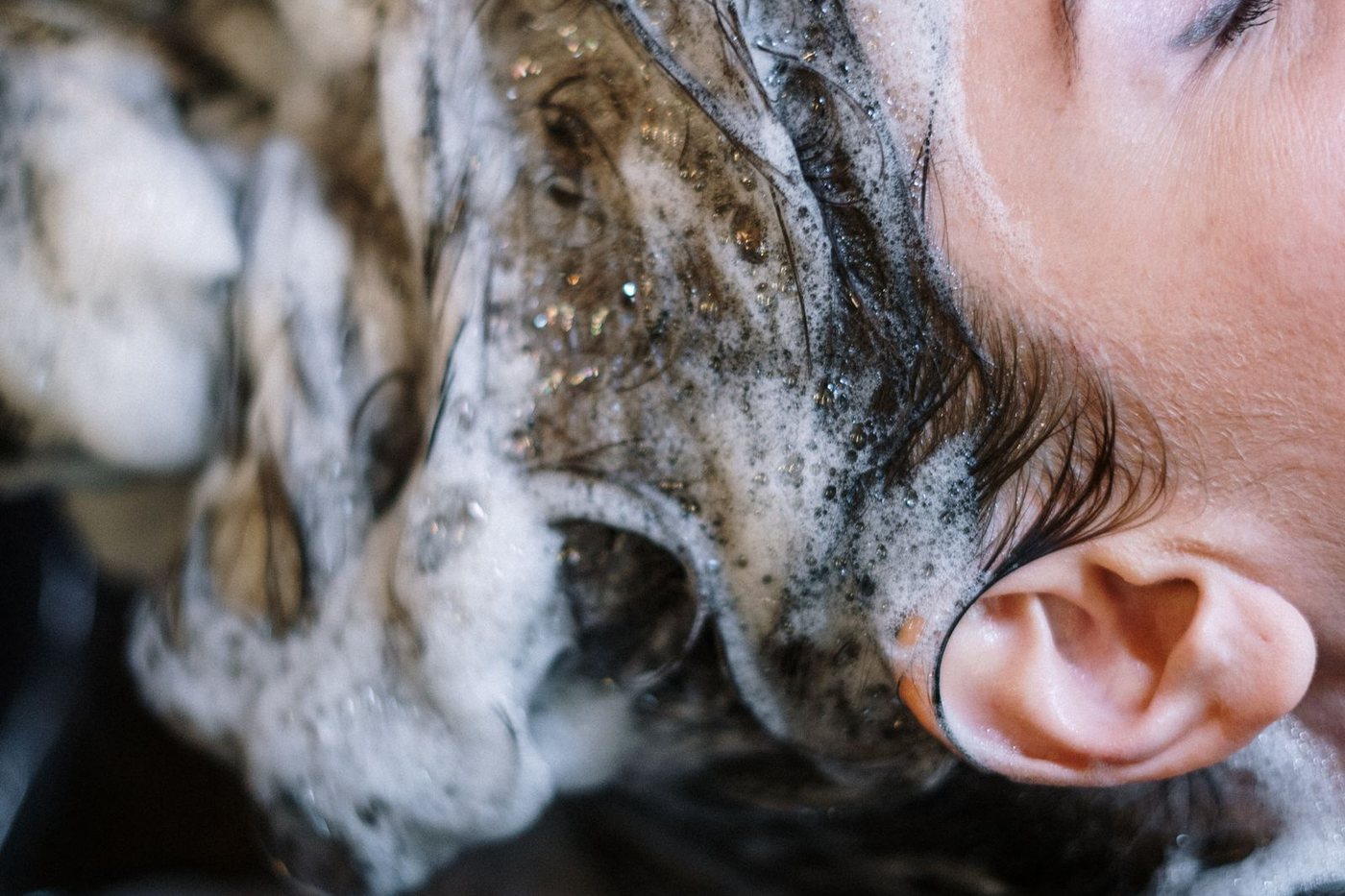
Sulfate-free shampoos reward technique more than their sulfate ancestors did, because you are trading chemical force for mechanical thoroughness. The method that converts most sceptics: wet hair completely (a full minute under the water — most under-washing is actually under-wetting); work a coin-sized amount into the scalp only, with fingertips, for a full minute; rinse; then wash a second time with half the amount — the second wash foams noticeably more because the first removed the oil that was killing the lather. Condition mid-lengths to ends only. Judge the system after three weeks: scalps accustomed to daily stripping often over-produce oil initially, then settle. If your hair still feels coated at a month, the mismatch is real — check for the olefin-sulfonate trap in the other direction (a gentle cleanser plus heavy silicone conditioner is the other classic failure), and re-read our silicones explainer before buying a third bottle.
Frequently asked questions
Will sulfate-free shampoo clean oily hair?
Gentle systems can, with technique: two washes, focus on the scalp, rinse thoroughly. If your scalp is very oily, a mid-strength sulfate-free formula (or an occasional stronger wash) is a realistic compromise — the goal is a routine you can sustain.
Why doesn't sulfate-free shampoo lather much?
Foam comes mainly from the primary surfactant and foam boosters. Sulfate systems foam extravagantly; gentler systems foam modestly. Lather is a sensory cue, not a cleaning meter — hair can be fully clean with little foam.
Is sulfate-free better for coloured hair?
Generally yes: strong surfactants lift colour faster, especially in the first washes after colouring. Sulfate-free washing is the standard recommendation for extending colour, alongside lukewarm water.
What about 'sulfate-free' body wash and toothpaste?
The same label logic applies. SLS in toothpaste is a separate common question — people with recurrent mouth ulcers often trial SLS-free toothpaste. The checks in this guide transfer directly.
How often should I clarify?
If you use styling products or silicones, every two to four weeks suits most people. A clarifying wash can itself be sulfate-free (olefin-sulfonate based) — strength, not sulfates per se, is what resets build-up.
Can I use sulfate-free shampoo every day?
Yes — gentle surfactant systems are designed for exactly that frequency, and daily washers are among the people who benefit most from switching. If daily washing itself is the problem (dry lengths), the answer is usually less washing plus conditioner strategy, not a stronger shampoo.
Checked against EWG Skin Deep cosmetics database, US FDA, Cosmetic Ingredient Review, Environmental Health Insights sources · Last updated 2026-10-22 · How we assess ingredients
Sources (5)
- EWG Skin Deep cosmetics database
- US FDA — Cosmetics hub (ingredient regulation and labelling)
- Cosmetic Ingredient Review — Final report on the safety assessment of sodium laureth sulfate (via PubMed)
- Environmental Health Insights — Human and environmental toxicity of sodium lauryl sulfate (review)
- New York State DEC — 1,4-dioxane limits for household, personal care and cosmetic products