The other half of label literacy
Ingredient lists are usually discussed as a source of risk, but they read the other way too: the same list that tells you what to skip tells you what a product is genuinely offering. This hub is the positive half of WithoutWith — the ingredients that formulators, dermatologists and experienced shoppers actively look for, explained with the same discipline we apply to the flagged list: what the ingredient is, what it actually does, what the evidence supports, who it suits, and how to tell whether a product contains enough of it to matter.
That last point is where most "with" marketing falls down. An ingredient can be famous, effective and listed on the front of the bottle — and present at a trace level that does very little. Because INCI lists run in descending order of concentration, position is your first clue: a hero ingredient should appear in the top portion of the list, not after the fragrance. Our explainers cover positioning, pairing and packaging for each ingredient, so you can judge a formula rather than a claim.
Five ingredients worth building a routine around
Our launch set covers the five benefit ingredients readers ask about most. Ceramides are the structural lipids of the skin barrier — the closest thing skincare has to replacing a missing building material. Niacinamide is the great all-rounder: barrier support, calmer-looking skin, better-looking pores, and an unusually gentle profile. Hyaluronic acid is the benchmark humectant for surface hydration. Vitamin C is the antioxidant of choice for brightness, with a famously fussy formulation chemistry that separates good serums from brown, oxidised ones. And zinc oxide is the mineral UV filter at the heart of the modern sunscreen conversation — protection that sits on the skin rather than soaking into it.
Each of these pairs naturally with a question from the flagged list. Moving away from chemical UV filters leads you to zinc oxide. Dropping fragrance leads you to barrier ingredients like ceramides and niacinamide that make fragrance-free routines comfortable. Our buying guides are built on exactly those pairings.
How to judge a 'with' claim
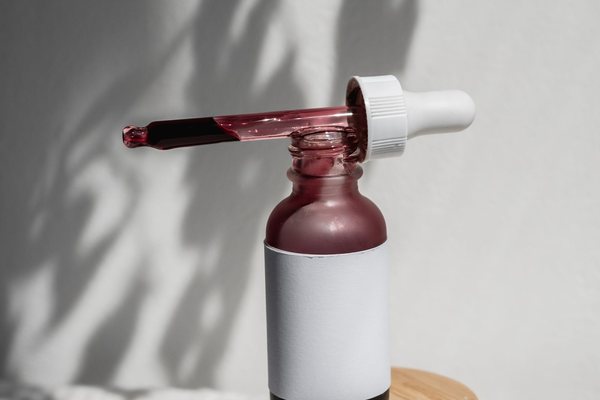
Four checks will serve you for almost any benefit ingredient. Position: is it in the top half of the INCI list? Form: is it the form the research used — vitamin C, for instance, comes in several forms with different strengths and stability? Packaging: light- and air-sensitive ingredients belong in opaque, air-restrictive bottles; a clear dropper bottle is a warning sign. Company: does the formula pair it with supporting ingredients (antioxidants together, humectants with occlusives) or is it a lone name in a bland base? The explainers in this hub walk through all four checks for their ingredient, with label examples you can copy into your next shop.
Benefit ingredients and the flagged list: how they interact
Readers sometimes treat the two hubs as opposing teams — the "bad" list and the "good" list. Formulators do not. A real product is a negotiated settlement between the two: the sunscreen that replaces oxybenzone with zinc oxide still needs emulsifiers and preservatives; the fragrance-free moisturiser leans harder on ceramides for the comfort fragrance used to fake. Understanding both lists is what turns label reading from a pair of superstitions into a skill: you stop asking "is it clean?" and start asking "what is doing each job in this formula, and is it the choice I would make?" That question, asked at the shelf in thirty seconds, is the entire point of WithoutWith.
A starter routine built from this hub
If you want the practical summary of everything above, it is this. Cleanse gently. In the morning, an antioxidant step (vitamin C) under a sunscreen you will actually wear — mineral if you prefer the surface route. In the evening, hydration (hyaluronic acid on damp skin) sealed with a barrier moisturiser built on ceramides and, ideally, niacinamide. That skeleton — protect, hydrate, seal — covers the great majority of what benefit ingredients can honestly offer, at a fraction of the cost of the twelve-step routines the industry prefers to sell. Add targeted extras only when a specific concern survives a month of the basics; most do not.
Seasonal and life-stage adjustments
The look-for list does not change with the calendar, but its emphasis does. Winter and air-conditioning argue for the sealing end of the hub — ceramides richer, HA always under an occlusive — while humid summers reward the lighter humectant textures and niacinamide's oil-balancing profile. Life stages shift the brief more than seasons do: teenage skin usually needs this hub least (sunscreen and a plain moisturiser cover most briefs); pregnancy prompts a conservative tidy-up in which the barrier trio and zinc oxide carry the routine while stronger actives are discussed with clinicians; mature skin, losing ceramide production yearly, gets the clearest measurable return from the mortar ingredients. The skill this hub is really teaching is not a list of five molecules — it is matching a formula's strengths to a skin's current season, in both senses of the word.
The look-for table: how to use it
The table below is the hub in miniature — every ingredient we track on the positive side, with its one-line job description. Use it as a shopping index: find the function you need (barrier mortar, humectant, antioxidant, mineral UV), note the names, then check them against real labels using the position rule — top half of the list or it is garnish. The five launch explainers go deep on the ingredients readers ask about most; the remaining table entries are covered in brief here and in the guides that use them, and full explainers for the rest of the table are published in reader-request order. If an ingredient in the table is doing heavy lifting in a product you love, asking for its explainer via the contact page genuinely moves it up the queue.
What this hub will not tell you
Three honest limits, so the hub's positive claims stay trustworthy. First, no explainer here can tell you an ingredient will work on your skin — cosmetic benefits are population tendencies, and individual response is the final data point, which is why every article ends in label skills rather than a verdict. Second, benefit ingredients are not treatments: the moment a concern becomes a condition — eczema that will not settle, rosacea, melasma, hair loss — the correct next step is a clinician, and our articles say so at exactly those moments rather than selling you a stronger serum. Third, this hub is not a shopping list with the prices filed off: the explainers deliberately stop at "how to judge", and let the guides hub do the choosing under stated rules. A site that explains honestly and sells carefully is slower to build than the alternative. It is also the only kind whose recommendations are still worth reading in five years.
One last encouragement
If this hub leaves you with a single habit, let it be the thirty-second label check: find the hero ingredient, check its position, check its form, check the bottle it lives in. Four checks, half a minute, and the entire benefit-ingredient industry becomes legible — the good products pass in the open, and the fairy-dusted ones quietly identify themselves. That is a better return on thirty seconds than any serum on the shelf.
The look-for ingredients list
| Ingredient | In short |
|---|---|
| Ceramides | Skin-identical lipids that form the 'mortar' of the moisture barrier. |
| Hyaluronic Acid | Humectant that binds water in the skin's surface layers for a plumper feel. |
| Niacinamide (Vitamin B3) | Barrier-supporting vitamin that calms redness and evens the look of pores. |
| Vitamin C | Antioxidant used in serums for brightness and defence against environmental stress. |
| Zinc Oxide | Mineral UV filter that sits on the skin and reflects UV; gentle and reef-friendlier. |
| Titanium Dioxide | The other mineral UV filter; often paired with zinc oxide. |
| Glycerin | The benchmark humectant — draws water into the outer skin layer. |
| Squalane | Plant-derived emollient mimicking the skin's own oils; light, non-greasy moisture. |
| Panthenol (Provitamin B5) | Soothing ingredient supporting skin comfort and hair moisture and shine. |
| Aloe Vera | Calming botanical for lightweight hydration and soothing sensitive skin. |
| Centella Asiatica (Cica) | Botanical extract prized for calming compromised, red or sensitive barriers. |
| Peptides | Amino-acid chains used in firmness-focused skincare formulas. |
| Shea Butter | Rich natural emollient that conditions and softens, including delicate underarm skin. |
| Argan Oil | Fatty-acid-rich oil that hydrates the hair shaft and adds shine. |
| Magnesium Hydroxide | Natural-deodorant active that neutralises odour without blocking sweat ducts. |
| Arrowroot Powder | Plant starch that absorbs moisture naturally in deodorant formulas. |
| Decyl Glucoside | Plant-derived, ultra-mild cleanser used in gentle and baby products. |
| Zinc Ricinoleate | Zinc salt from castor oil that traps odour molecules in natural deodorants. |
| Vitamin E (Tocopherol) | Antioxidant that protects formulas and supports skin against environmental stress. |
| Calendula | Botanical extract used to calm minor irritation and delicate skin. |
| Chamomile | Gentle antioxidant botanical used in baby and sensitive-skin products. |
| Coconut Oil | Natural oil with antimicrobial properties used in deodorants and hair care. |
| Tea Tree Oil | Botanical oil with antifungal and antibacterial properties for scalp and skin. |
| Biotin | B-vitamin marketed in hair products for strength and keratin support. |
| Keratin | Structural hair protein used to smooth the cuticle and reduce frizz. |
| Probiotics | Ferment and culture extracts used to support skin and underarm microbiomes. |
| Candelilla Wax | Plant wax giving vegan structure to balms and deodorant sticks. |
| Bamboo Fiber | Biodegradable, soft wipe material replacing plastic spunlace. |
| Centella Asiatica (Cica) | Botanical prized for soothing compromised, red or sensitive barriers. |
Guides in this hub



Frequently asked questions
What does 'ingredient to look for' actually mean?
It means the ingredient has a well-describable benefit, a reasonable body of supporting evidence, and a track record of use — the positive counterpart to our flagged list. It does not mean every product containing it is good; concentration, form and formulation decide that, which is what each explainer teaches you to judge.
Is more of a good ingredient always better?
No. Several benefit ingredients are dose-sensitive: vitamin C serums, for example, are commonly formulated in a moderate range because higher is not automatically more effective and can mean more irritation. Each explainer discusses sensible ranges as they are generally reported, without prescribing a personal routine.
Can I use several of these ingredients together?
Generally yes — ceramides, niacinamide and hyaluronic acid are famously compatible and often formulated together. Vitamin C is the fussier one and is usually kept in its own step. If you use prescription skincare, check combinations with your clinician.
Why do some products advertise an ingredient that is last on the list?
Because there is no rule that a front-of-pack ingredient must be present at an effective level. This is sometimes called 'fairy dusting'. Reading position on the INCI list — the habit this hub teaches — is the defence.
Are natural ingredients better than synthetic ones?
Not inherently. Several look-for ingredients are nature-identical molecules made in a lab for purity and consistency, and several flagged ingredients are natural. We judge ingredients on function, evidence and fit for the person, not on origin.